Bee Health & Disease Prevention
A prevention-first VetSoul course for bees health baselines, disease warning signs, biosecurity, parasite or pathogen awareness, welfare monitoring, and urgent response.
2 modules · 6 lesson plans
View curriculumA colony is a single living organism made of thousands. This hub teaches bee health, nutrition, reproduction, brood care, hive biosecurity, welfare, and emergency readiness — for beekeepers, pollinator stewards, agriculture teams, students, and veterinary teams.

6
published curricula
12
modules with structured objectives
36
lesson plans across the curricula
12
quiz assessment blueprints
2
certification pathways
4
tracks in preparation
All numbers are computed from the live course catalog — nothing is estimated or invented.
Published curricula show their real module and lesson-plan counts. Nothing is marked available until real lessons exist — no invented ratings, student counts, or completion data.
A prevention-first VetSoul course for bees health baselines, disease warning signs, biosecurity, parasite or pathogen awareness, welfare monitoring, and urgent response.
2 modules · 6 lesson plans
View curriculumA practical VetSoul course for feeding bees by life stage, health status, environment, behavior, production goals, and species-specific nutrition needs.
2 modules · 6 lesson plans
View curriculumA VetSoul course for understanding bees reproductive biology, breeding readiness, environmental planning, birth or hatch preparation, and early brood viability signals.
2 modules · 6 lesson plans
View curriculumAn ethical bees breeding course for selection goals, health screening, records, housing, environmental standards, placement decisions, and welfare safeguards.
2 modules · 6 lesson plans
View curriculumA foundational course for brood care, early environment setup, feeding support, growth monitoring, hygiene, social development, and early warning signs.
2 modules · 6 lesson plans
View curriculumA calm, practical first-aid course for recognizing urgent bees problems, stabilizing safely, isolating affected animals, and communicating clearly with veterinary or specialist support.
2 modules · 6 lesson plans
View curriculumQueen quality literacy, requeening decisions, and colony continuity planning.
Explore the reproduction trackFrame-reading rhythms, seasonal management, swarm prevention, and wintering preparation.
Explore the prevention trackForage planning, pesticide awareness, hive placement, and welfare assessment for thriving colonies.
Explore the welfare trackResponsible harvest literacy connecting colony strength, ethics, and sustainable production decisions.
Visit the breeder workspaceFirst structured contact with beekeeping: colony baselines, safety, and inspection routines.
Confident colony care, feeding decisions, and emergency readiness across seasons.
Welfare-first reproduction literacy, honest records, and colony-splitting preparation.
Apiary literacy that supports scientific study: biology to prevention systems.
Client-education resources and team pathways for apiary-serving practices.
Every Bees Academy pathway follows the same practical arc, so learners always know where a lesson sits and where their own responsibility ends.
Normal colony baselines: brood patterns, laying rhythm, flight activity, and what a settled hive sounds like.
Varroa monitoring literacy, hive hygiene, apiary spacing, and biosecurity between colonies.
Structured frame reading: brood, stores, queen signs, and records that reveal colony change early.
Turning observations into calm decisions: what can wait, what needs a plan, what needs help now.
Abnormal brood, sudden collapse, suspected foulbrood, and thresholds where the right decision is a veterinarian or apiary inspector.
Practical tools are being built alongside the curricula — and they will only ship after veterinary review. No formula on VetSoul will ever be published unverified.
Structured mite-count records — sugar roll and alcohol wash — with treatment-threshold trend visibility.
Seasonal inspection timelines with swarm-season and wintering checkpoints before each visit.
Feeding structure support connected to the Bee Nutrition curriculum.
VetGPT Coach is an educational assistant, not a diagnosis engine. In apiary mode it supports safer questions, biosecurity and seasonal planning, and course review — and always keeps your veterinarian or apiary inspector in the loop.
Emergency language always redirects to a licensed veterinarian — and notifiable diseases such as foulbrood to your apiary authority.
Prompts connect to the published Bees Academy curricula.
Colony biology, hive systems, and apiary husbandry context — not generic pet advice.
The Bees Academy treats breeding as a responsibility, not just a production line. Two published curricula cover the full arc from reproductive literacy to brood care and colony decisions.
Every breeding decision starts with the strength, health, and resilience of the colonies involved.
Documented colony health checks and varroa monitoring before any breeding decision.
Understanding temperament, disease resistance, local adaptation, and honest selection trade-offs.
Swarm literacy, split timing, and organized queen-rearing preparation.
Brood-pattern reading, thermal stability, and early escalation thresholds.
Knowing when not to split or requeen, transparent records, and responsible colony placement.
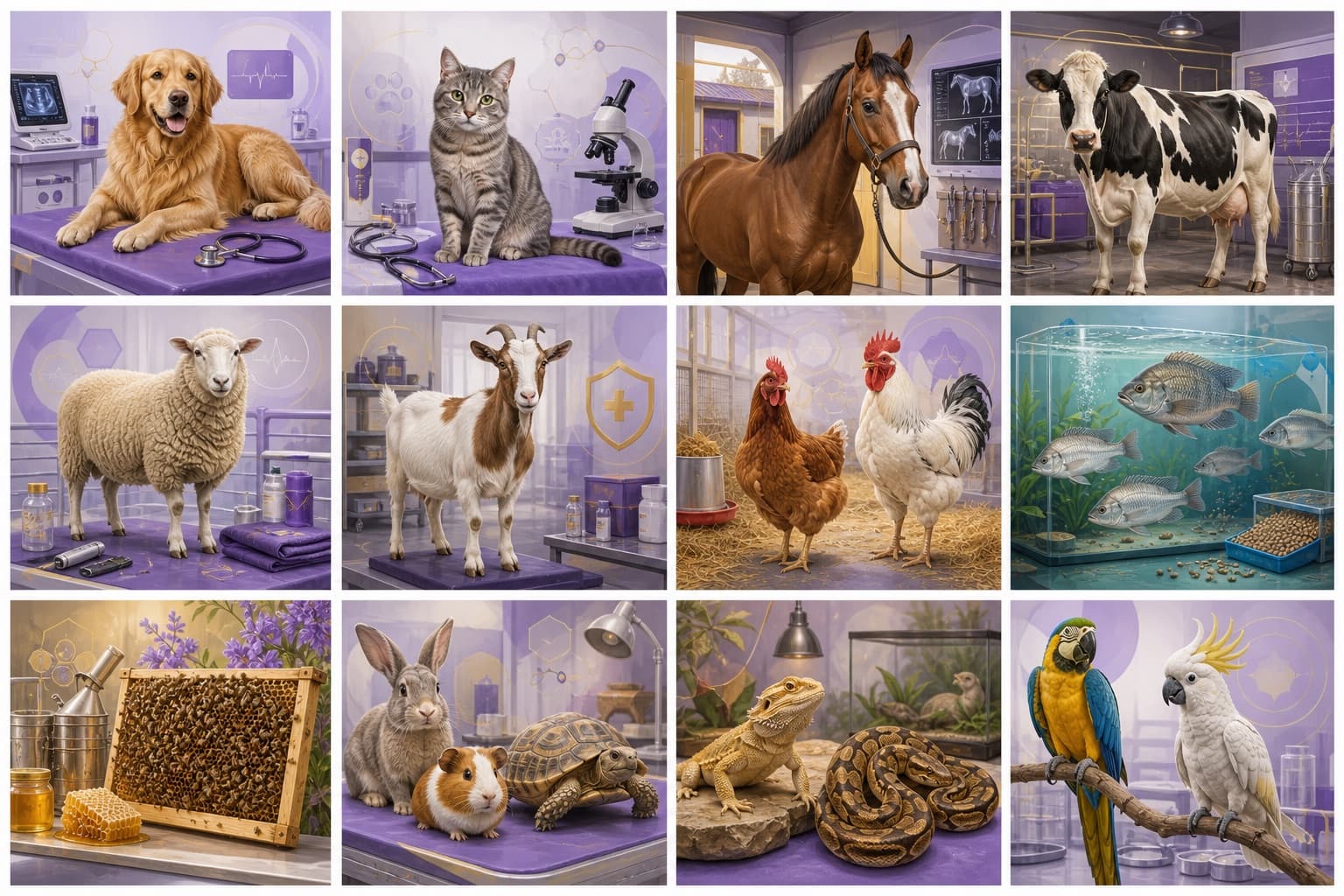
Bees course visual
Premium VetSoul illustration for colony health, nutrition, reproduction, disease prevention, and beekeeper certification.
Structured apiary curricula with objectives, modules, and certificates.
Browse coursesPractical apiary guides and printable references for hive-side use.
Open the libraryInspection checklists, varroa monitoring records, and seasonal calendars.
View protocolsEvidence-aware clinical reading for serious apiary learners.
Explore researchSpecies-aware educational AI support. In development — education only, never a diagnosis.
Preview VetGPTCertificates are issued through the Certification Center once a curriculum's lessons and quiz checkpoints are completed.
A VetSoul course for understanding bees reproductive biology, breeding readiness, environmental planning, birth or hatch preparation, and early brood viability signals.
View curriculumAn ethical bees breeding course for selection goals, health screening, records, housing, environmental standards, placement decisions, and welfare safeguards.
View curriculumVerification, badges, and completion rules for every VetSoul certificate.
Open the centerColony science, prevention, welfare, ethical breeding, and practical care organized into one consistent reference path.
A concise VetSoul overview of the animal group, learner use cases, care context, and responsible education boundaries.
Taxonomy, common groupings, production or companion context, and naming conventions for organized learning.
Body systems, normal structures, handling considerations, and anatomy literacy for safer care conversations.
Core body functions, life-stage changes, environmental needs, and normal baseline patterns.
Feeding foundations, hydration, body condition, life-stage needs, and nutrition risk awareness.
Cycle awareness, fertility planning, pregnancy, incubation, birth, hatch, and newborn support.
Species-specific communication, stress signals, social needs, enrichment, and behavioral welfare.
Humane training, cooperative care, handling education, learner checklists, and practical routines.
Disease pattern literacy, common warning signs, outbreak awareness, and veterinary escalation points.
Vaccination or biosecurity, parasite control, sanitation, monitoring, housing, and preventive routines.
Emergency red flags, safe stabilization boundaries, transport planning, and when urgent veterinary care is needed.
Quality-of-life standards, comfort, pain awareness, enrichment, ethics, and responsible ownership or production.
Responsible selection, recordkeeping, genetics awareness, care standards, and placement or retention planning.
Books, downloads, planners, trackers, certificates, and practical tools connected to the animal hub.
Course pathways, certificates, lessons, quizzes, and membership access for this animal group.
Species-aware VetGPT prompt architecture, safety framing, conversation history, and learner support.
Future marketplace slots for vetted products, educational bundles, downloads, and professional resources.
Future community structure for learners, breeders, professionals, associations, and moderated knowledge exchange.
No. Every curriculum teaches observation, prevention, and preparation so you can act earlier and communicate better — examination, diagnosis, and treatment always belong to licensed professionals and authorized inspectors.
Bees Academy content teaches observation, prevention, and preparation. It never replaces examination, diagnosis, or treatment by a licensed veterinarian or authorized apiary inspector. For abnormal brood patterns, sudden colony collapse, or suspected foulbrood, contact a licensed veterinarian or your apiary authority immediately — foulbrood suspicion is a notifiable event in most regions. Apiary biosecurity protects your colonies, your neighbors' colonies, and wild pollinators.
Showing 10 of 160 courses
Species
Choose an animal group
Categories
Filter by learning objective
Bees directory card
A VetSoul course for understanding bees reproductive biology, breeding readiness, environmental planning, birth or hatch preparation, and early brood viability signals.
2 modules · 6 lesson plans
Bees directory card
A practical VetSoul course for feeding bees by life stage, health status, environment, behavior, production goals, and species-specific nutrition needs.
2 modules · 6 lesson plans
Bees directory card
An ethical bees breeding course for selection goals, health screening, records, housing, environmental standards, placement decisions, and welfare safeguards.
2 modules · 6 lesson plans
Bees directory card
A prevention-first VetSoul course for bees health baselines, disease warning signs, biosecurity, parasite or pathogen awareness, welfare monitoring, and urgent response.
2 modules · 6 lesson plans
Bees directory card
A foundational course for brood care, early environment setup, feeding support, growth monitoring, hygiene, social development, and early warning signs.
2 modules · 6 lesson plans
Bees directory card
A calm, practical first-aid course for recognizing urgent bees problems, stabilizing safely, isolating affected animals, and communicating clearly with veterinary or specialist support.
2 modules · 6 lesson plans
Bees directory card
Read bees behavior through stress signals, social needs, enrichment design, humane support plans, and cooperative handling foundations.
Curriculum in preparation
Bees directory card
Use humane bees handling and training foundations to make daily care, transport, exams, and routine procedures calmer and safer.
Curriculum in preparation
Bees directory card
Evaluate bees welfare through comfort, housing fit, pain recognition, enrichment, ethical care standards, and quality-of-life planning.
Curriculum in preparation
Bees directory card
Follow a structured VetSoul bees certification pathway with practical assessments, applied care skills, records, and shareable completion badges.
Curriculum in preparation
Trusted learning for owners, ethical breeders, students, and professionals who care about animal welfare and responsible decisions.